
How to avoid the dangers of summer for your horse
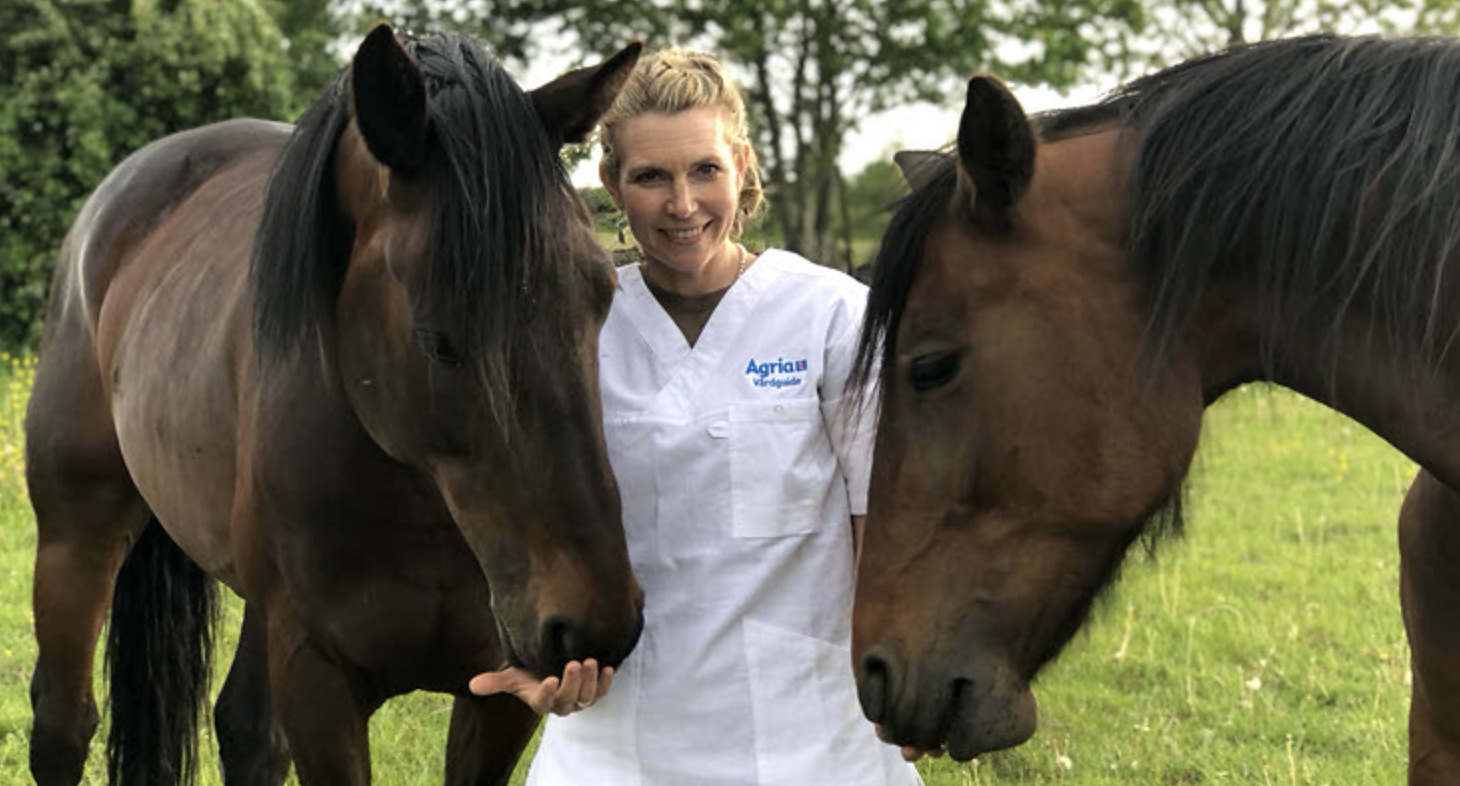
To have a really nice summer together with your horse, it’s important to be prepared and keep an eye out for the most common summer hazards. Together with one of our main partners for the DressagePower Horse Show – Agria – We can take advantage of Linda Dunbäck, online veterinarian at Agria, for important advice on how to prevent the horse from being affected by illness or injury.
Linda Dunbäck is a licensed veterinarian and divides her time between her own clinic and work at Agria. In addition, she owns her own racehorses and western horses and rides at a recreational level. Professionally, her special interests are nutrition, the horse's teeth, and prophylaxis – that is, preventive measures that keep horses healthy.
Linda Dunbäck’s passion for preventing illness and injuries in horses makes her the perfect fit for the job at Agria, where she provides advice via booked phone or video calls in the Agria Care Guide app. Veterinary advice is free for Agriaforsikrede horses and is available 24/7, year-round. You can book appointments either directly in our app or via Agria’s veterinary information line at 0775-88 88 88 (button 2).
The veterinarian's tips for a safe and injury-free summer
1. Learn about bandaging and normal values
If an accident occurs, it is important to be prepared.
– It is not optimal to do something for the first time in a sharp position, so practice applying different types of bandages when the horse is healthy. For example, a ”normal” low bandage on the leg, bandaging a horse with a halter or a galloping bandage over the hooves and balls.
It is also good to learn to take the temperature, check the pulse and count the horse’s breathing. If you know your horse’s normal values and how its stomach sounds ”normally”, you can more easily detect if anything is out of the ordinary. If you find it difficult to feel for any increased pulse at the withers (for example, during hoof bleeding, lameness, and other hoof diseases), you can ask your horse trainer or veterinarian to show you how to do it.
– Having a chart with the horse’s skeleton in the emergency box isn’t too bad either. That way, you can double-check where the joints are located if, for example, you suspect that an injury is close to the joint.
2. A well-stocked pharmacy
In the summer, the majority of questions addressed to Agria’s veterinary advice center concern various types of wound injuries. Summer work is great, but unfortunately it doesn’t happen very often that horses are kicked, torn, or get stuck in fences.
– Many of the calls to us come in late evenings when the pharmacies are closed; it can then be difficult to obtain materials to wash and bandage the wounds with, says Linda Dunbäck and continues:
– With uncomplicated wounds, you can often help the horse yourself, but then you need to have a proper vet clinic at home (tips in the fact box at the bottom). For example, make sure you have plenty of potassium chloride in the stable; a small bottle for human treatment is not enough by far.
3. Cold water and ice
Many acute injuries can be relieved with cooling. Therefore, it is important to have access to running water and ice near the horses, and that the water hose is long enough to reach the summer garden.
– It’s always good to freeze ice beforehand so that it’s available. Ice can do wonders for acute injuries, for example if the horse has been hit by a kick to the thigh. It slows down the swelling so that it doesn’t become too severe. Water or ice is also good if any horse should suffer a colic, to relieve the pain while waiting for the vet, explains Linda Dunbäck.
4. Supervision and inspection
When the horses are released onto the pasture, just monitoring them once a day is not enough.
– Someone needs to check on them at least twice, preferably three, says Linda Dunbäck.
A proper daily inspection of each horse is necessary, where you not only look but really feel the entire body of the horse. Also, be sure to remove any ticks.
If you suspect that a horse has been bitten by a snake, the best thing to do is to try to keep it still and contact a veterinarian. Trampling around with it can spread the venom throughout the body. In the case of both bites and wounds, make sure the horse has adequate tetanus protection.
Even if the horse's hooves are included in the daily inspection, the dryness increases the risk of hoof cracks. On roads that are prone to summer frost, stepping on stones can cause soreness and damage to the sole/strake. Please discuss preventive measures with your horse groomer; some horses may need protective hoof boots or hoof boots.
5. Take eye problems seriously
In summer, the horse's eyes can become irritated by insect bites, but it can also suffer serious eye damage. In that case, it is crucial that your horse receives immediate help.
– If the horse does not want to open one eye, it is often worse than if both eyes are mildly inflamed. If it stands and clamps its eye, it may be a trauma. In that case, the eye must be examined urgently by a physical veterinarian.
Linda Dunbäck cannot emphasize enough that it is important to take a suspected eye injury seriously; in the worst case, the horse may lose their sight.
– When it comes to eyes, don’t hesitate to contact the veterinarian once too many times. If you have time immediately, you can consult us at Agria Vårdguide; otherwise – call an out-of-hours physical veterinarian!
6. Thoughtful gardens with working electricity
Don't let new horses together in the first few days; first let them walk in the adjoining stables or stand next to each other in the stables so that they have had time to greet each other.
Many injuries occur when a horse is cornered and cannot escape; instead, it has to defend itself. Therefore, there must be no sharp corners in the enclosure where horses can ”get stuck”; also consider how water and other valuable resources are placed.
– Personally, I want electric wire that can come off in the meadows; if horses get tangled in loose wires and can’t be untangled, it can lead to nasty injuries. Also, make sure the electricity works and regularly clear away plants around the fence; they grow fast in the summer. If it’s dry, you need to water the ground around the fence so that the electricity can be properly conducted, explains Linda Dunbäck.
7. Build a garden in the garden
A really good tip is to build a ”box yard” in or right next to the summer garden. You can lead the horses into this area when they are being examined, so that the examination can be carried out safely and quietly. The box yard can also be used when the veterinarian comes or if a horse needs to be kept in silence.
8. Study the horses and make adjustments
Studying the horses and their daily rhythms in the stable is educational; it can also help you prevent injuries. If you notice that the horses are anxious and try to run away from ticks and other insects in the middle of the day, then maybe they should be allowed to stay inside for a few hours and instead be outside at night?
– We humans love warm summer days, but it’s not always the best for the horses; it’s best if they have a shelter where they can seek protection from the sun and insects.
Also ensure that all horses have the opportunity to become thirsty. Some individuals guard resources in the pasture and do not let the others out.
9. Would you drink from the water bucket yourself?
– Fresh water in the yard is very important; algae growth can cause gastrointestinal disorders in the horse and lead to loose stools or colic. I usually say that you should be able to put a cup in the tub and drink the water yourself. It needs to be changed every day, emphasizes Linda Dunbäck.
In addition to water, horses need to be given salt; during the summer, a horse that is exercising and sweating rarely has enough salt stones to last them. You can, for example, mix loose salt into plenty of soaked hay or alfalfa pellets.
– Supplement with minerals that are adapted for horses in pasture. Above all, it is important that the horses get selenium; we have soil types in Sweden that are deficient in selenium.
10. Fly swatters and insect screens
Heads down collars are great, but need to be properly adjusted. The collar should be a bit away from the eyes and shouldn’t sit too tightly around the jaw; the horse should be able to chew. If not properly adjusted, the collar can cause scratching or eye problems. Also check that it is intact; a loose thread can get into the eye and cause irritation or injury.
– The helmet must not be worn 24/7. Of course you take it off when the horse is being examined, but your horse also needs to be given a break from the helmet every few hours. Maybe at night? The same applies to insect covers; they need to fit well and the horse should be given a break from them from time to time.
According to Linda Dunbäck, grazing reducers (”mungor”) can work for some horses, but the horse cannot have them on all the time because it will lead to incorrect eating behavior. Sometimes it is better for a prey-sensitive horse to go in the pasture without grass, with controlled feeding.
11. Exercise combats overweight
Many hobby horses rest completely during the summer, even though they would need to move to avoid becoming overweight. Exercising your horse in the summer can prevent illnesses, adjust the time of day you ride or drive to avoid insects.
– I usually advocate active rest in the summer. For example, you can take the opportunity to leave the riding arena and do some conditioning training a few times a week, on good forest trails. Maybe the horse could rest for a couple of weeks in the winter instead? Then it’s usually easier to control the intake of nutrients, says Linda Dunbäck.
12. Cool in the transport
A horse transport can get very hot. The right type of ventilation is essential; keep an eye on the trailer’s thermometer. The horse should be kept cool but should not be exposed to drafts as this can damage the eyes.
– Of course, there is no need for blankets in transport in the summer, but also think about protection. If you want to use transport covers, they should be cool and easy to move around. If it gets too hot, the horse’s legs can get irritated and start kicking.
Suggestions for veterinary pharmacies
- Cotton on a roll
- Synthetic wool pads (such as Cellona or Soffban), ask at the pharmacy or buy from a local veterinary clinic
- Non-elastic gauze bandages
- Glue sticks
- Sterile gas gauze compresses for wound cleansing
- Sterile wound compresses with a smooth surface (such as Sorbact or Solvaline) for the repositioning of wounds
- Adhesive tape (thin paper tape)
- Snögg or other ”animal patches” with adhesive on one side work well with a compress.
- Needles for wounds
- Salts solution, preferably 250- to 500-milliliter bottles (ask the pharmacist or buy it at a local veterinary clinic). Large quantities are required for cleaning wounds in horses.
- Saline solution in 20- to 30-milliliter bottles/pipettes for eyewash
- Hypochlorous acid for wound cleansing (e.g., Aniocyn or Ekodes)
- Hydrogel, protects and creates a good environment for wound healing (e.g. Intrasite gel or Aniocyn wound gel/spray gel)
- Chlorhexidine shampoo (for example Hibiscrub)
- Medical honey ointment
- Zinc paste
- Vaseline
- Sax
- Tweezers
- Flashlight
- Cool bags/Cold packs (also make sure to have frozen ice packs in the freezer)
- Disposable gloves
- Fever thermometer
- Brake
- Hole bar
- Plastic bags and silver tape for shoe insoles
- Slickstone (good to have the horse focus on the slickstone during, for example, a hoof bath)
Read more about Agria & their services on their website: https://www.agria.se/hast/. Thank you Agria for being part of the DressagePower Horse Show!